Long-Term Monitoring Sites
Seongsan Bridge
Bridge monitoring and field data review using sensing systems for structural response measurement.
Site Overview
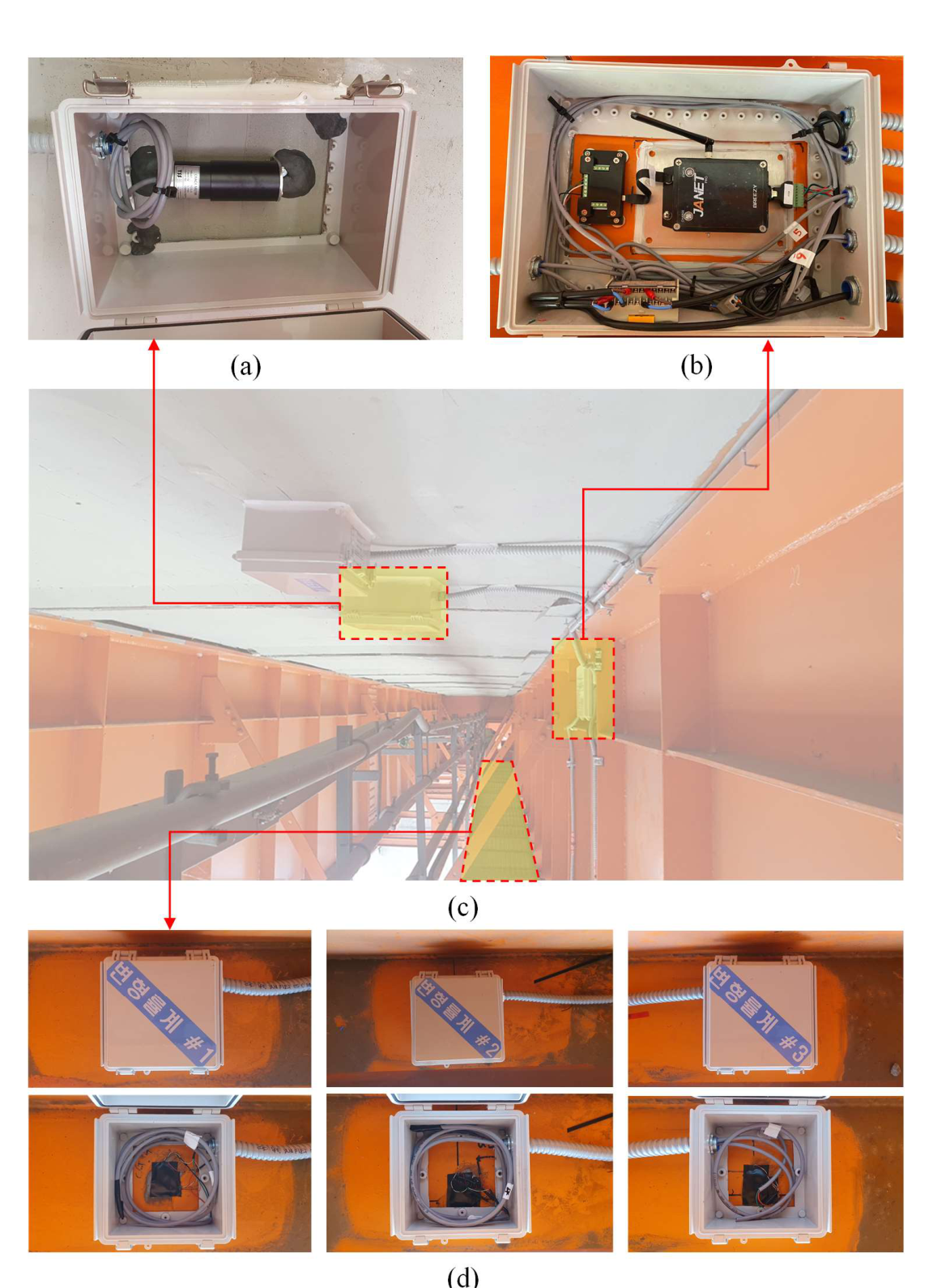
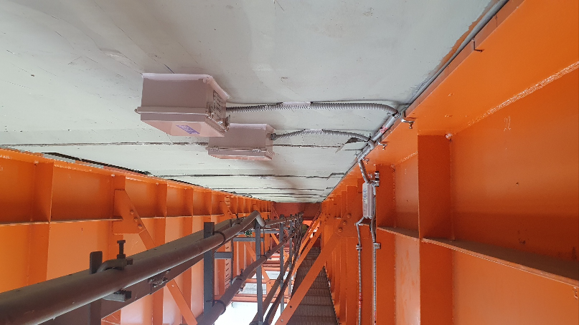
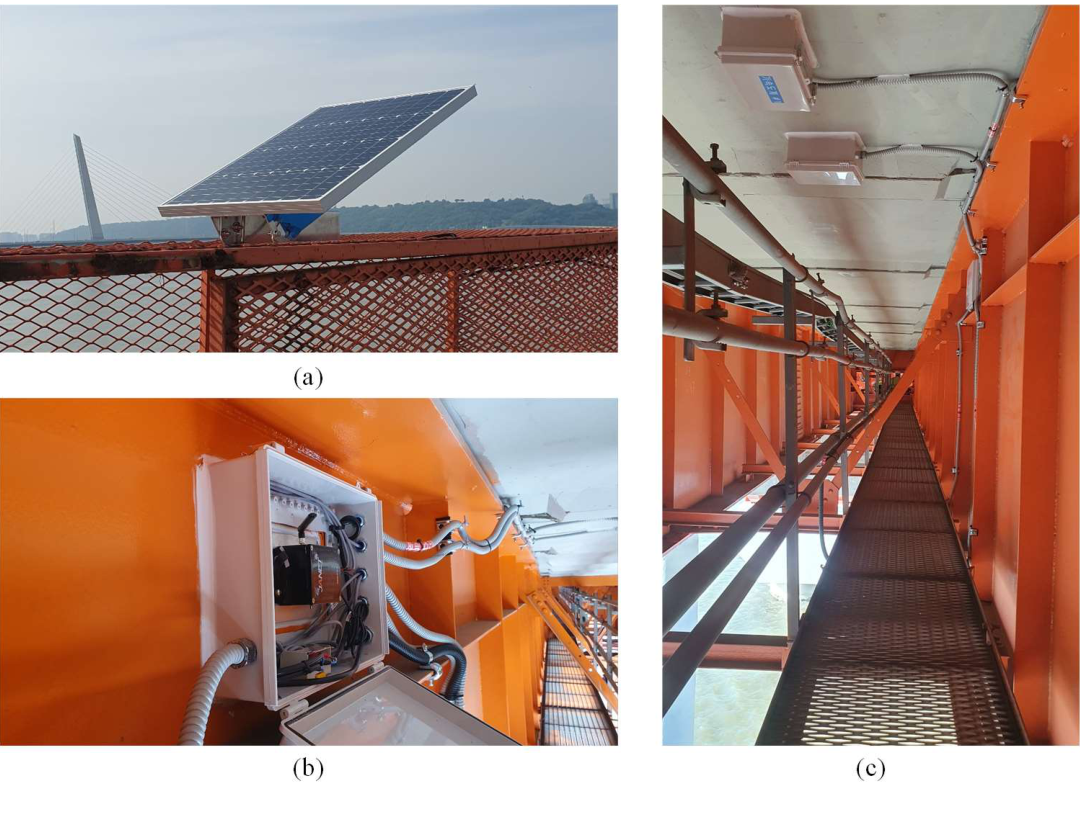
Seongsan Bridge was used as a real-world long-term monitoring site for validating a JANET-based IoT sensing and cloud-computing system. The system was installed on the south side of the bridge on July 6, 2023, targeting the S13 span around the G5 to G6 girders. The deployment focused on collecting bridge response data and reviewing whether sensor-to-cloud monitoring could support practical bridge condition assessment.
Sensor / Equipment Setup
- Installed one JANET IoT sensing unit, three welded strain gauges, and one crack meter around the CB2 to CB6 sections of the S13 span.
- Configured JANET to measure three-axis acceleration and multi-channel analog sensor data from a single node.
- Transmitted field measurements through an LTE Cat.1 modem to an Amazon EC2-based cloud server.
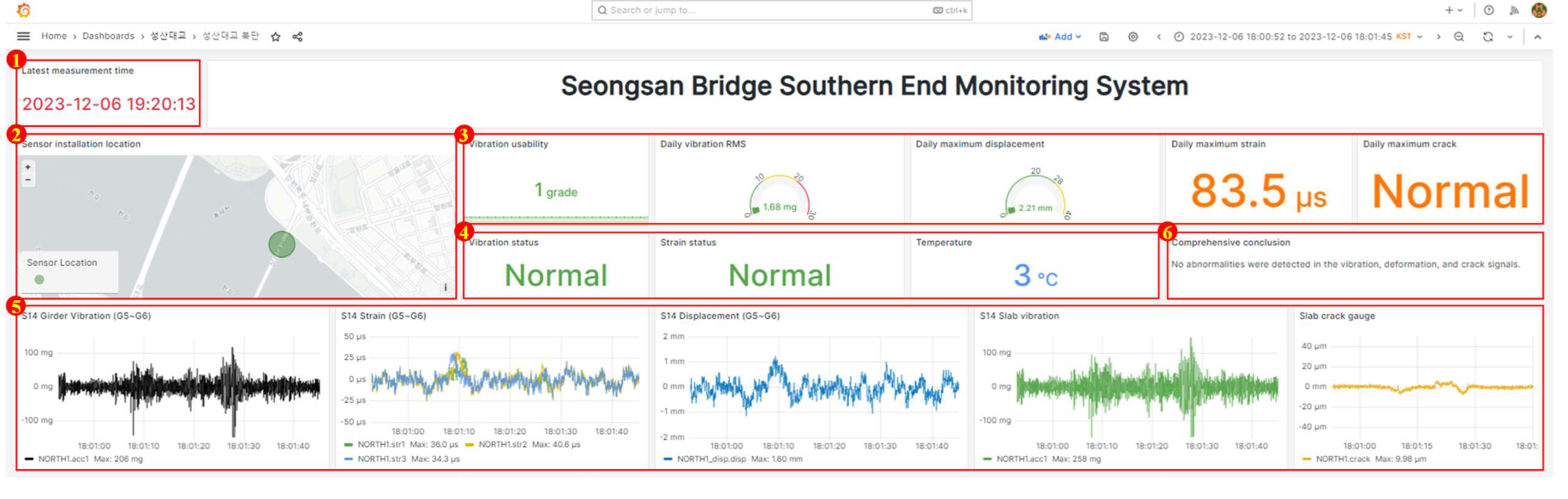
- Used Node.js for data acquisition, Python for analysis, InfluxDB for time-series data, MySQL for representative indices, and Grafana for dashboard visualization.
- Collected measurement metadata including battery voltage, LTE signal strength, trigger type, and vibration trigger count.
Development Highlights
- Developed and validated an end-to-end bridge monitoring workflow connecting field sensing, LTE communication, cloud storage, cloud-side analysis, and dashboard visualization.
- Designed the system to acquire acceleration and strain data simultaneously from a single sensor node, reducing synchronization issues in field monitoring.
- Implemented cloud-side data handling for raw measurements, representative indices, and web-based visualization.
- Reviewed field data quality, system operation history, and monitoring reliability during the Seongsan Bridge deployment.
Installation Photo
Monitoring Results
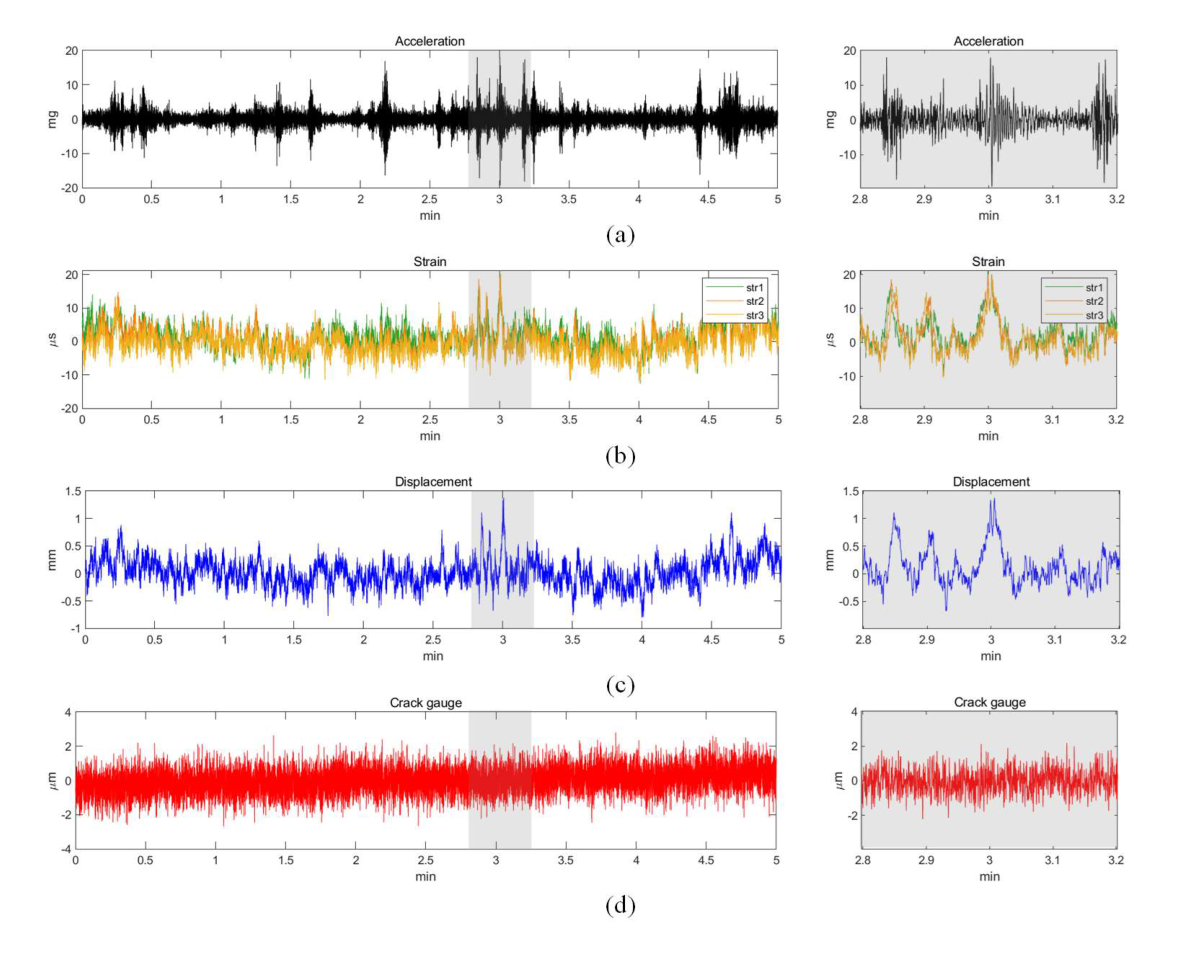
- Collected three-axis acceleration, strain response, crack gauge, and system-operation records from the installed field system.
- Verified sensor noise levels of approximately 0.1 mg for acceleration and 1.52 microstrain for strain in lab-scale testing.
- Identified vertical acceleration frequency peaks at 3.271 Hz and 5.176 Hz from field measurements.
- Estimated a maximum displacement of 2.61 mm, below the L/1000 allowable deflection value of 37.6 mm for the monitored section.
- Observed a maximum crack width of 66.8 micrometer, below the 0.3 mm allowable crack-width criterion for wet reinforced-concrete conditions.
Video / Demo
Field Context
The Seongsan Bridge deployment is one of the central field applications from my master's thesis. It demonstrates my work on building a scalable bridge health monitoring system that connects sensor hardware, field installation, wireless communication, cloud computing, data analysis, and dashboard-based engineering interpretation.